New Agreement for South African Rugby Players
Professional rugby players in South Africa, alongside their employers, have reached a new two-and-a-half-year agreement concerning employment conditions within the sport. This new deal, known as the South African Rugby Industry Collective Agreement (SARICA), aims to establish consistent employment regulations and protections for both professional players and their respective clubs. The agreement was negotiated by MyPlayers, representing professional players, SA Rugby, and the South African Rugby Employers’ Organisation (SAREO), which acts on behalf of provincial unions and franchises.
Ettienne de Lange, chairperson of SAREO, stated that SARICA forms the basis for all contracted rugby players. He emphasised that it guarantees minimum standards for remuneration and employment for both male and female professional players, serving as the default document for individuals entering the profession. The agreement encompasses all levels of professional play, from the Springboks down to age-group teams and development players within unions.
Focus on Player Welfare and Workload Management
A key aspect of SARICA is its focus on player welfare, particularly in managing the demands of a South African rugby season that extends throughout the year. Eugene Henning, CEO of MyPlayers, highlighted that load management, covering both training and playing, is a fundamental component of player welfare and presents a complex challenge in a 12-month season. He noted that SARICA’s regulations are aligned with World Rugby‘s recommendation that individualised load management is the “gold standard” approach to player welfare.
Under the new agreement, players are guaranteed a minimum of 12 non-contact weeks within a contract year. Of these, five weeks are designated as annual leave, with three weeks required to be taken in an uninterrupted block. The remaining seven non-contact weeks can be allocated for additional annual leave, bye weeks, injury rehabilitation, travel periods, or parental leave.
Henning also mentioned that employers are able to meticulously measure the training and playing load of all players, as well as ensure the provision of non-contact weeks. He explained that despite professional rugby being played year-round in South Africa, the load profile of their players is often lower than that of players in other countries that have a uniform close season, attributing this to the work of employers’ high-performance departments.
Comprehensive Benefits and Industry Balance
Beyond workload management, SARICA provides a range of benefits and protections for players. These include comprehensive medical scheme benefits, income replacement insurance for disability and catastrophic injury, and provisions for concussion and head injury management. The agreement also addresses rest periods and player workload management, a contracting model for player numbers and team salary caps, and protections for annual leave and off-season periods.
Rian Oberholzer, CEO of SA Rugby, commented that SARICA aims to balance the interests of all stakeholders within the industry. He added that by setting minimum employment standards, including remuneration and benefits, and ensuring player welfare, the agreement contributes to the consistent and fair operation of professional rugby in South Africa. The agreement reflects an updated approach to managing the 12-month season, aiming to provide the best possible outcomes for players within the framework of the South African playing calendar.
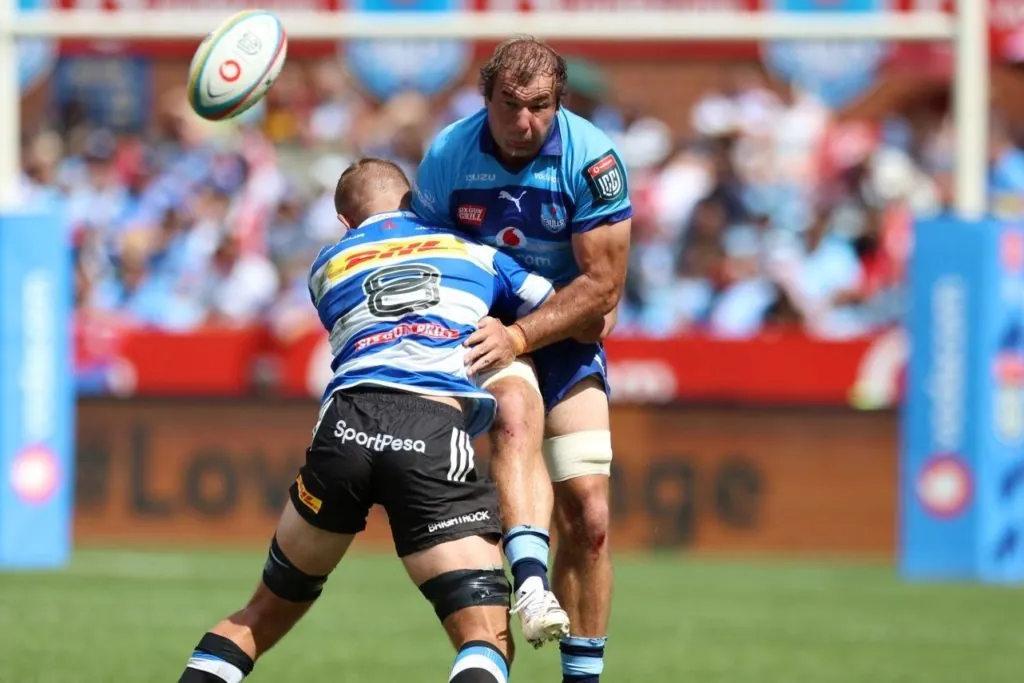
The new collective agreement is designed to provide a uniform set of employment regulations, ensuring that all professional players, from the most experienced Springboks to those in development squads, benefit from consistent standards. This includes protections for their health and well-being, acknowledging the demanding nature of professional rugby.
The negotiations between MyPlayers, SA Rugby, and SAREO have resulted in a framework that seeks to address the unique challenges of the South African rugby season. The agreement’s provisions for non-contact weeks and comprehensive benefits are intended to safeguard players’ physical and mental health, while also ensuring fair employment practices across the board. The two-and-a-half-year deal is set to impact professional rugby in South Africa.
Source: planetrugby.com
