Shifting Support for Infantino
Gianni Infantino, president of Fifa, was previously considered likely to secure re-election for a fourth term in March. Most of Fifa’s 210 member associations had endorsed his bid, and he faced no significant opposition. However, this situation has changed following a plan to sell stakes in the World Cup and other competitions to private investors, a plan which has since been abandoned.
The global football community is now divided on whether Infantino should continue in his role. While some countries have publicly declared their support or opposition, others have communicated their stance privately. Some positions are inferred from statements made by their respective continental confederations.
What was once anticipated to be an unopposed path to a fourth term for Infantino now appears to require him to secure sufficient votes. If an opposing candidate emerges, the election would become a direct contest. A simple majority of 106 votes is needed to win in an election with two candidates. If there are three or more candidates, a two-thirds majority is required in the first round, followed by a simple majority in a second round if no winner is determined.
Confederation Alignments and Potential Challengers
The current count suggests 73 votes in support of Infantino, 124 in opposition, and 13 undecided, though this picture is subject to change. Several European nations, including England and Wales, have retracted their letters of support for Infantino’s re-election.
The opposition to Infantino intensified when Uefa (Europe), Concacaf (North America), and the Asian Football Confederation (AFC) issued a joint letter. This letter accused Infantino and Fifa of betraying trust through “deception.” This coalition represents 136 associations. However, there are dissenting members within these confederations, such as Bhutan, the Philippines, and the UAE in Asia, who have backed Infantino.
Asia is seen as a crucial swing region, with many associations yet to declare their position. Mexico has also supported Infantino, diverging from Concacaf‘s general stance. The USA and Canada have supported Concacaf‘s statement but have not explicitly opposed Infantino. The Oceania Football Confederation (OFC) and its members have not made any public comments on the matter, but the OFC stated they would release a statement after a meeting.
Infantino retains strong allies, particularly within Africa (Caf) and South America (Conmebol). These regions have reportedly benefited from significant investment since he assumed office. This investment could help him secure votes from nations within the AFC, Concacaf, and OFC, which have benefited from the Fifa Forward programme. Saudi Arabia, which will hold its own football leadership elections in August, has not yet taken a public stance, but its position could influence others in the region.
It is not guaranteed that every nation will align with its confederation’s position. The joint letter from AFC, Concacaf, and Uefa emphasized that football belongs to no single individual or institution, but to the players, fans, clubs, and member associations. They stated that growth over the past decade was a shared achievement, not the work of one person. The confederations also stressed that the issue is about the integrity of the game and its leadership, not about money or revisiting past decisions.
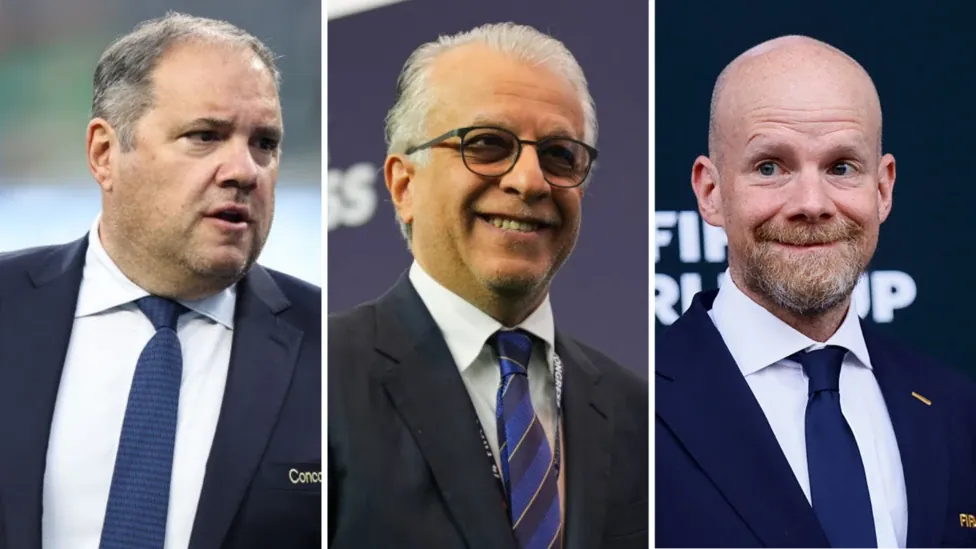
The letter from AFC President Salman Bin Ibrahim Al Khalifa, Concacaf President Victor Montagliani, and Uefa President Aleksander Čeferin, along with their respective general secretaries, highlighted that Fifa‘s recent letter acknowledged mistakes in process but attributed them to communication failure rather than a failure of judgment. They argued that attempting to sell an interest in the Fifa World Cup was a fundamental breach of trust.
Potential Paths Forward
Infantino has not indicated a desire to resign, but his tenure could potentially end by autumn. This could occur if 19 of the 37 members of the Fifa Council call for an emergency meeting, which would then need to take place within a fortnight. The council comprises nine members from Uefa, seven from AFC, six from Caf, five from Concacaf, five from Conmebol, and three from Oceania, in addition to Infantino and Fifa secretary general Mattias Grafstrom.
Given the council’s composition, this approach is considered improbable. This leaves the possibility of a candidate challenging Infantino in March. No one has yet announced their candidacy, but if the leaders of Uefa, Concacaf, and AFC are serious about removing Infantino, uniting behind a single candidate is likely their best strategy. The deadline for candidates to declare their intention to run is November.
Historically, other confederations have expressed frustration with European dominance in football, its competitions, and its financial aspects. This context has led to Concacaf president Victor Montagliani being frequently mentioned as a potential challenger to Infantino in recent weeks. The distribution of votes could change significantly depending on who decides to run. For example, if AFC president Sheikh Salman were to step forward, it could sway some Asian associations currently supporting Infantino.
The global outlook remains uncertain due to emerging divisions within confederations, the potential for key figures to declare their positions in the coming months, and the absence of a clear challenger to Infantino. What is evident is that Infantino is no longer assured of a fourth term.
The joint letter also criticized Fifa‘s commitment to presenting a report on these events to the Fifa Council, arguing that proper governance would require an independent third-party review, not one conducted by Fifa itself. The letter also noted that only one elected official was present at a recent leadership meeting in Morocco, with no Fifa Council members or member associations invited, reinforcing concerns about accountability and openness.
The confederations concluded their letter by calling for unity and leadership that serves football, rather than commanding it, as a duty to the game.
Source: bbc.com
