The 2026 USATF Outdoor Track and Field Championships concluded with notable incidents, including a leg cramp experienced by Noah Lyles in the men’s 200m final and the overturning of Tara Davis-Woodhall’s long jump victory after a protest.
Lyles experiences cramp in 200m final
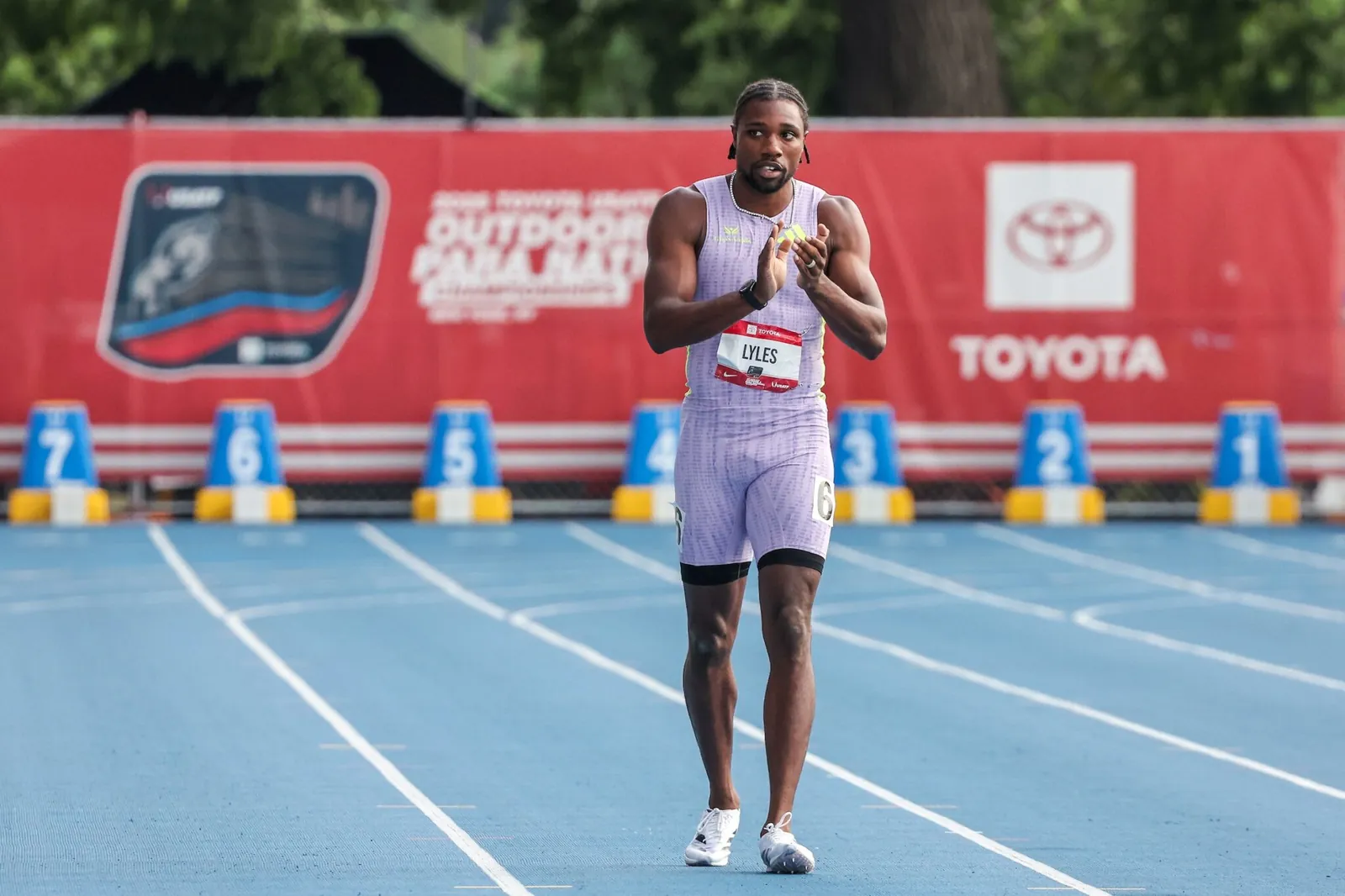
Noah Lyles, the U.S. Paris Olympic champion, encountered an apparent leg cramp during the men’s 200m final. This incident forced him to walk the final 100 metres of the race. Earlier in the championships, Lyles had achieved a world-leading time of 9.79 seconds, equalling his personal best, to win the men’s 100m final on Friday. He had appeared set to make another strong showing in the 200m, leading as he rounded the bend before suddenly pulling up.
Lyles later described the sensation as a cramp. He stated that everything was proceeding well until he felt a “grabbing sensation,” prompting him to stop to avoid further injury. He expressed confidence that the issue was a cramp and not a more significant muscle injury, indicating that he simply needed stretching and electrolytes. Despite the alarming visual, Lyles downplayed the incident, expressing optimism about his health. He noted that he experienced cramping, which differs from the sharp pain typically associated with a muscle tear.
Following Lyles’s slowdown, Garrett Kaalund went on to win the 200m title with a time of 20.04. Lyles completed the race in 50.88 after walking the final portion. Medical evaluations and continued monitoring are considered important when athletes experience sudden pain in the back of the thigh during maximal sprinting, even if the athlete believes it is only a cramp. Officials and team staff did not immediately suggest that Lyles had sustained a structural hamstring injury, leading to discussions about how this event might impact his preparations for future competitions.
Hamstring cramps can occur in high-intensity sprinting due to repeated maximal contractions over short periods. Factors such as dehydration, electrolyte imbalances, fatigue, and neuromuscular overload can contribute to these cramps, especially in elite athletes performing explosive movements. As muscles become fatigued, communication between nerves and muscle fibers can be disrupted, increasing the likelihood of involuntary, painful contractions. While cramps and muscle strains can present similar symptoms during competition, physicians typically conduct thorough evaluations to determine an accurate diagnosis.
A hamstring strain often involves overstretching or tearing of muscles or tendons at the back of the thigh, potentially causing a popping sensation, sharp pain, swelling, bruising, weakness, or difficulty walking. In contrast, a muscle cramp is usually a sudden, involuntary tightening of the muscle without structural damage, though it can still cause significant pain that forces an athlete to stop. Most uncomplicated muscle cramps typically resolve with gentle stretching, massage, and rest. Treatment for hamstring strains, however, depends on their severity and may require rehabilitation before an athlete can safely return to sport.
Preventive measures for exercise-related cramps include maintaining proper hydration, replacing electrolytes as needed, warming up adequately, progressively increasing training intensity, and ensuring sufficient recovery between demanding workouts. Even with these precautions, world-class athletes performing at their physical limits can still experience cramps. Lyles’s experience highlights the importance of distinguishing between a temporary cramp and a more serious muscle injury for long-term performance. Early assessment, appropriate recovery, and a gradual return to activity are key components of modern sports medicine, helping athletes reduce the risk of recurrent injury.
Davis-Woodhall’s long jump title overturned
In the women’s long jump, Tara Davis-Woodhall, the 2024 Olympic long jump champion, initially appeared to secure her fourth USATF title. She achieved a leap of 7.16m in the final round and had begun celebrating and giving interviews. However, a protest was filed by Stanford University, leading to a review of her jump.
Following the review, officials ruled Davis-Woodhall’s 7.16m jump a foul. This decision meant her next-best mark of 6.90m was used, dropping her to third place. As a result, Alyssa Jones of Stanford University, whose mark was 6.96m, moved into first place, earning her first USATF outdoor title. Jones became the first collegiate athlete to win the women’s long jump title since Kathy McMillan of Tennessee State in 1979. Monae Nichols was awarded second place with a jump of 6.92m.
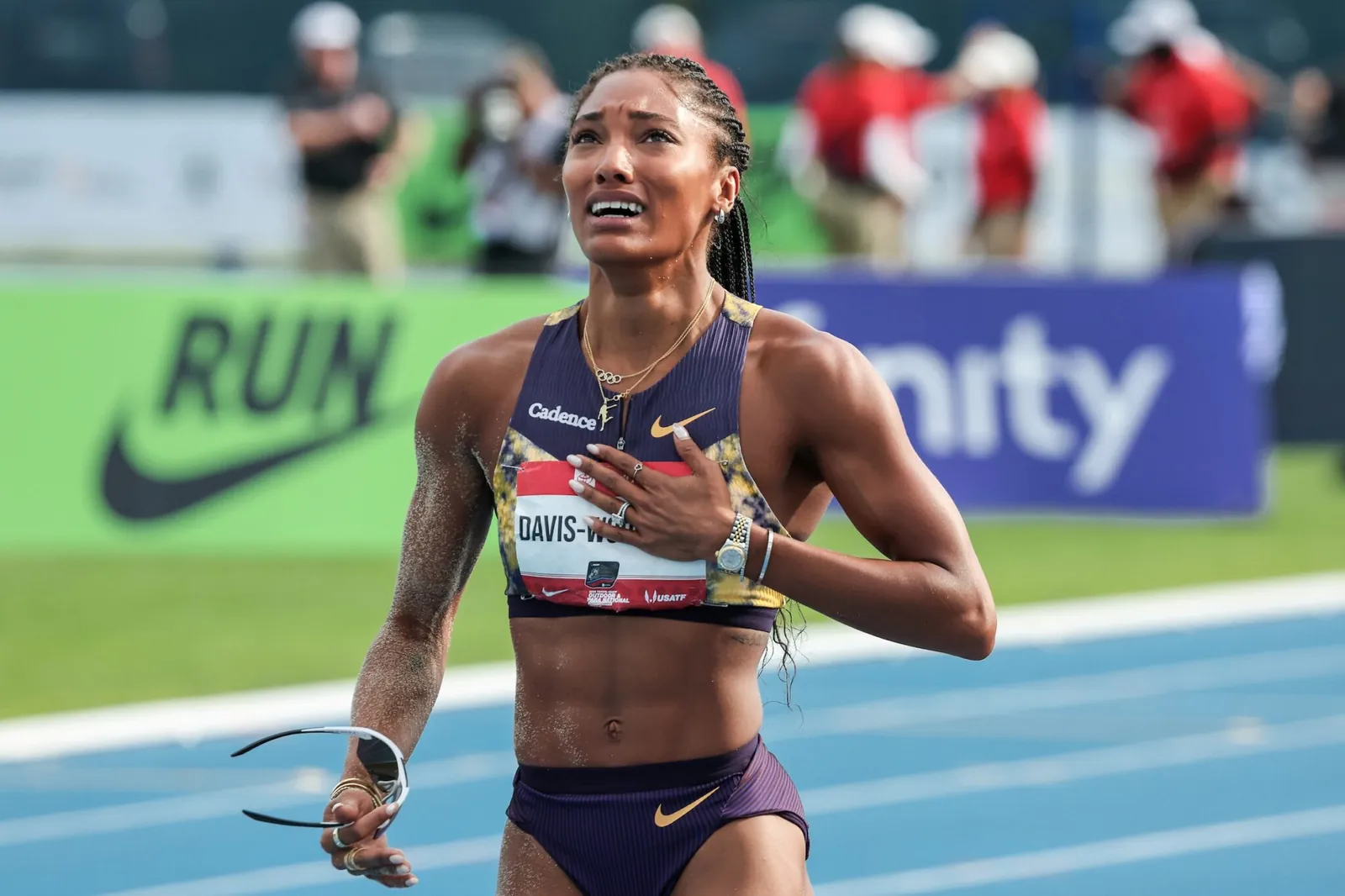
The protest concluded an eventful weekend for Davis-Woodhall. Despite this being her first loss since the 2023 World Championships, she maintained a positive outlook after the event. The bronze medal in the long jump marked her second medal of the weekend. As a dual-event athlete, Davis-Woodhall also secured a bronze medal in the 100m hurdles on Saturday, recording a time of 12.57.
Source: runningmagazine.ca
