Netherlands and Morocco prepare for World Cup 2026 encounter
The Netherlands and Morocco are set to meet in the World Cup 2026 Round of 32 in Monterrey. Both teams advanced from their respective groups undefeated, with the Netherlands topping Group F with seven points and 10 goals, while Morocco finished behind Brazil on goal difference, also with seven points, from a group that included Scotland and Haiti.
This fixture is seen as more than just a knockout tie, highlighting themes of history, migration, and identity. The match will take place at Estadio Monterrey, with temperatures projected to be at least 30 degrees C when the game begins. Hydration breaks are expected to be a significant factor.
Mohamed Ouahbi, the Morocco manager, emphasised that the primary motivation for his players is to represent their country. He also drew parallels between the passion for football in Mexico’s north-east and the fervour in Morocco. The Netherlands manager, Ronald Koeman, will also be looking for strategic advantages in the match.
The evolving landscape of international talent
The dynamic between the Dutch and Moroccan football federations has undergone a significant transformation. Historically, players born in the Netherlands to Moroccan families often chose to represent the Netherlands. This assumption, however, no longer holds true.
The shift began to become evident with players like Dries Boussatta, who was the first Dutch-born player of Moroccan heritage to represent the Netherlands. He later made appearances for Morocco. This change in player allegiance is attributed to various factors, including family, culture, and opportunity, rather than solely political reasons.
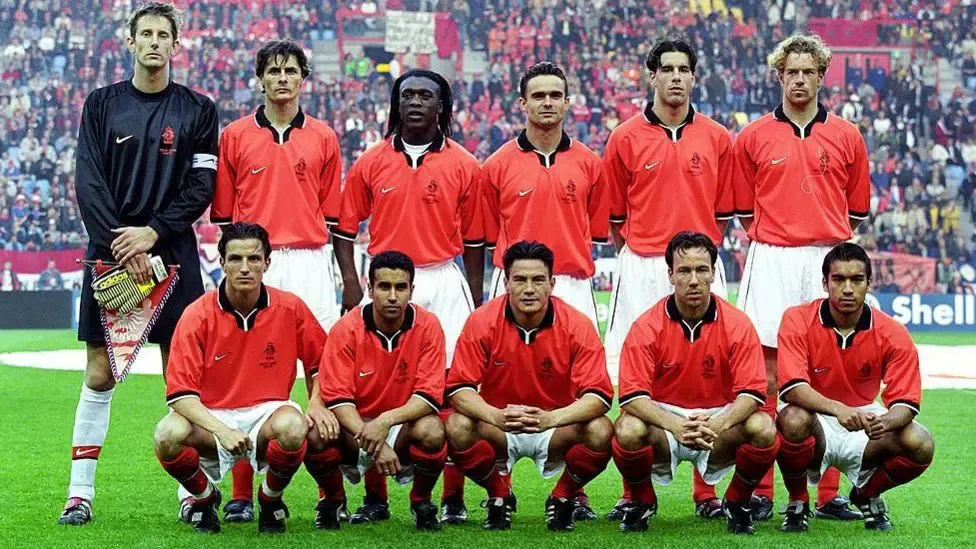
More than a decade ago, the Royal Moroccan Football Federation initiated a strategy to identify and recruit dual-national talent across Europe. Scouts were deployed in countries such as France, Belgium, Spain, and the Netherlands to engage with promising young players and their families. Former Morocco technical director Pim Verbeek noted the crucial role families played in a player’s decision-making process.
This proactive approach reshaped Morocco’s international football fortunes. By the 2018 World Cup, members of their squad were born in the Netherlands. Four years later, when Morocco reached the semi-finals, their squad included 14 foreign-born players. At World Cup 2026, of Mohamed Ouahbi’s 26-man squad were born outside Morocco, and the team became the first in World Cup history to field an entire starting XI born abroad during their group-stage draw against Brazil.
The decision of Hakim Ziyech to represent Morocco, despite being developed within the Dutch system and having played for the Netherlands at youth level, symbolised this shift. Ziyech, born in Dronten, cited feeling Moroccan as his reason for choosing the Atlas Lions. Other players who followed this path include Noussair Mazraoui, Sofyan Amrabat, and Anass Salah-Eddine, all raised within Dutch football, and Ismael Saibari, who was primarily educated at PSV Eindhoven’s academy.
Key players and historical context
Brian Brobbey, the Netherlands striker, has been a significant force, scoring with each of his first shots on target this summer. Cody Gakpo has also been a notable performer, and Crysencio Summerville has contributed with his play from the right. Ouahbi indicated that Morocco has a plan for Brobbey, drawing on his experience coaching against him at youth level.
For Morocco, Ismael Saibari has been a threat, having scored goals. The midfielder Ayyoub Bouaddi has also attracted attention. The historical connection between the nations is also notable; Morocco drew with Poland and England in Monterrey during Mexico 1986, reaching the knockout stage for the first time.
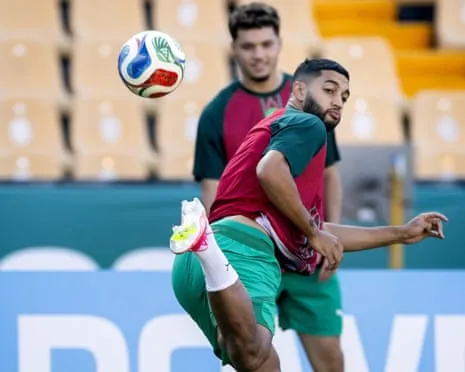
The backdrop of this match is also influenced by Moroccan migration to the Netherlands, which accelerated in the late 1960s. This has resulted in generations of Dutch citizens with Moroccan heritage, creating a sense of belonging that spans both countries. The upcoming match is seen as the latest chapter in a story about modern football, where nationality and heritage play increasingly prominent roles.
The Netherlands secured top spot in their group with a 3-1 victory over Tunisia.
Read Also
Source: bbc.com
