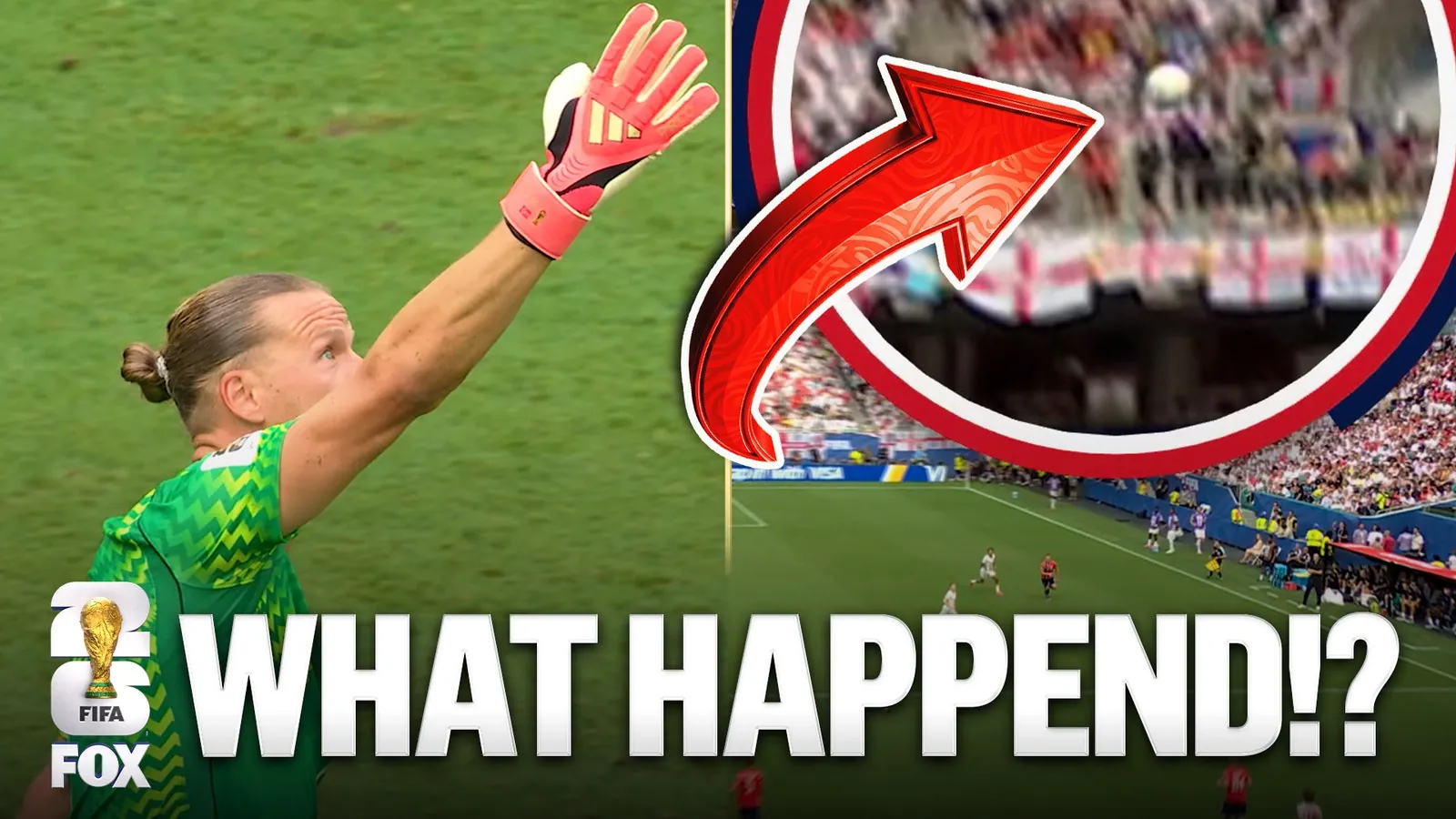
Norway exited the World Cup 2026 in the quarter-finals following a 2-1 defeat to England, a match overshadowed by controversy surrounding Jude Bellingham’s goal. The Norwegian team raised concerns that the ball might have struck a spidercam wire in the lead-up to the goal, an incident that, if confirmed, would have led to the goal being disallowed and play restarting with a dropped ball.
Sander Berge, a midfielder for Norway and Fulham, described the situation as “ridiculous,” highlighting the fine margins in such high-stakes games. Norway captain Martin Odegaard also commented on the refereeing decisions, noting that the margins did not favour his team. England was trailing to Andreas Schjelderup’s opening goal for Norway when the incident in the build-up to their opener occurred.
Controversial Decisions and Replays
Replays showed Norway goalkeeper Orjan Nyland’s goal kick passing near a spidercam cable suspended above the pitch. The ball then fell to Elliot Anderson, who passed to Anthony Gordon, leading to Bellingham’s goal. Several Norway players immediately protested to referee Clement Turpin, and head coach Stale Solbakken engaged with the official at half-time.
Solbakken stated that the referee did not see the incident and received no message indicating contact. FIFA later confirmed there was “no evidence” of the ball touching a wire. FIFA Media posted on X that the sensor in the connected ball showed no peak in its “heartbeat” when in the air, suggesting no contact with the overhead wire that would alter the ball’s movement. Despite this, Solbakken maintained that the ball “dropped straight from heaven,” a sentiment echoed by his goalkeeper and other players.
The match also saw another contentious decision when a second-half header from Torbjorn Heggem, which would have given Norway a 2-1 lead, was disallowed. A Video Assistant Referee (VAR) review penalised Erling Haaland for a shove on Elliot Anderson during a corner kick. Berge acknowledged that while Haaland’s physical strength is an advantage, such actions can lead to penalties.
Pundit Reactions and Match Statistics
Former Denmark goalkeeper Kasper Schmeichel expressed his belief that Norway was the better team, suggesting England was fortunate in their win. He found the foul called on Haaland’s push mystifying. Conversely, former England star Peter Crouch disagreed, asserting that England was the superior side and that Haaland’s action constituted a clear foul.

On the statistical front, England held an advantage in possession (52-48), expected goals (0.96-0.77), shots on target (8-4), and accurate pass percentage (91-85). Jude Bellingham was a key player for England, scoring a goal in the victory. His tournament total is six goals, placing him behind Lionel Messi (8), Kylian Mbappé (8), and Erling Haaland (7) in the Golden Boot race.
Bellingham has been in strong form recently, propelling the Three Lions into the semi-finals of the World Cup. England head coach Thomas Tuchel admitted that his side had been fortunate in decisive moments during the game.

The use of Snickometer-style technology, typically associated with cricket, has been a point of discussion throughout the tournament. A similar controversy arose during Portugal’s 2-1 victory over Croatia in the last 32, where technology ruled out a potential equaliser for Croatia due to a slight touch by Igor Matanovic in an offside position. Tuchel noted that the chip in the ball should be able to detect even minimal contact.
Read Also
- World Cup: England prepare for 'hazardous heat threat' in Miami quarter-final against Norway
- Manchester United and Liverpool reportedly pursue Wolves midfielder Joao Gomes
- Leandro Trossard's potential move to Besiktas highlights Arsenal's transfer trend
- Argentina leads Switzerland in World Cup quarter-final in Kansas City
Source: bbc.com
