The Democratic Republic of Congo has secured its place in the World Cup 2026 round of 32, marking a significant achievement for African football. The team’s progression comes after a successful group stage campaign, culminating in a crucial victory against Uzbekistan.
This success is part of a broader triumph for African teams in the tournament, with nine out of ten entrants from the continent advancing to the knockout rounds. This performance has defied initial skepticism and challenges faced by African football leading into the expanded tournament.
African teams defy expectations
The performance of African teams in the World Cup 2026 has surpassed expectations, particularly given the concerns raised by some pundits regarding the quality of play in the newly expanded 48-team format. Many had anticipated that teams from Africa would struggle against established European sides.
However, the group stage has seen a strong showing, with a high percentage of African teams qualifying for the round of 32. This collective achievement has been highlighted as a coming-out party for African soccer on the global stage.
The final day of the group stage saw three African teams in action, all aiming to solidify their positions. Ghana, having already secured its spot with four points from its first two games, experienced a 2-1 loss to Croatia. DR Congo achieved the necessary win against Uzbekistan to advance.
In another match, Algeria faced Austria. Both teams needed only a draw to progress. The game ended with both teams advancing after an equalizer from Austria, which followed a goal from Riyad Mahrez that had put Algeria ahead 3-2 in stoppage time.
DR Congo’s tactical shift
The match between DR Congo and Uzbekistan drew particular attention, especially as it countered predictions by some officials that the expanded tournament would feature many “completely uninteresting” matches. Instead, it proved to be an engaging encounter.
DR Congo had previously demonstrated its strength in the tournament, securing a draw against Portugal in its opening match and holding Colombia to a narrow 1-0 loss. These early performances established the team as a formidable opponent.
The team’s initial strategy in the tournament was designed to compete against ball-dominant teams like Portugal and Colombia. This involved a deep, compact defensive block, relying on defensive specialists to repel attacks and then launching quick counter-attacks with speedy forwards.
However, against Uzbekistan, DR Congo faced a different challenge. Uzbekistan took an early lead through an Eldor Shomurodov finish just 10 minutes into the match, forcing DR Congo to adopt a more attacking approach, a style they were not accustomed to playing.
During the first half, DR Congo struggled to adapt, often resorting to long passes over the Uzbek defense or relying on isolated wingers like Brian Cipenga. These efforts were largely ineffective in generating cohesive attacks.
After halftime, the team’s approach shifted. They began to provide more support to their wingers. For instance, when Cipenga received the ball wide, Sunderland midfielder Noah Sadiki would drift to join him, facilitating better-directed movements with one-two passes.
Striker Yoane Wissa also contributed by floating out wide, offering a passing option and laying the ball off to teammates. This increased support around the ball-carriers led to more fluid and incisive attacks for DR Congo.
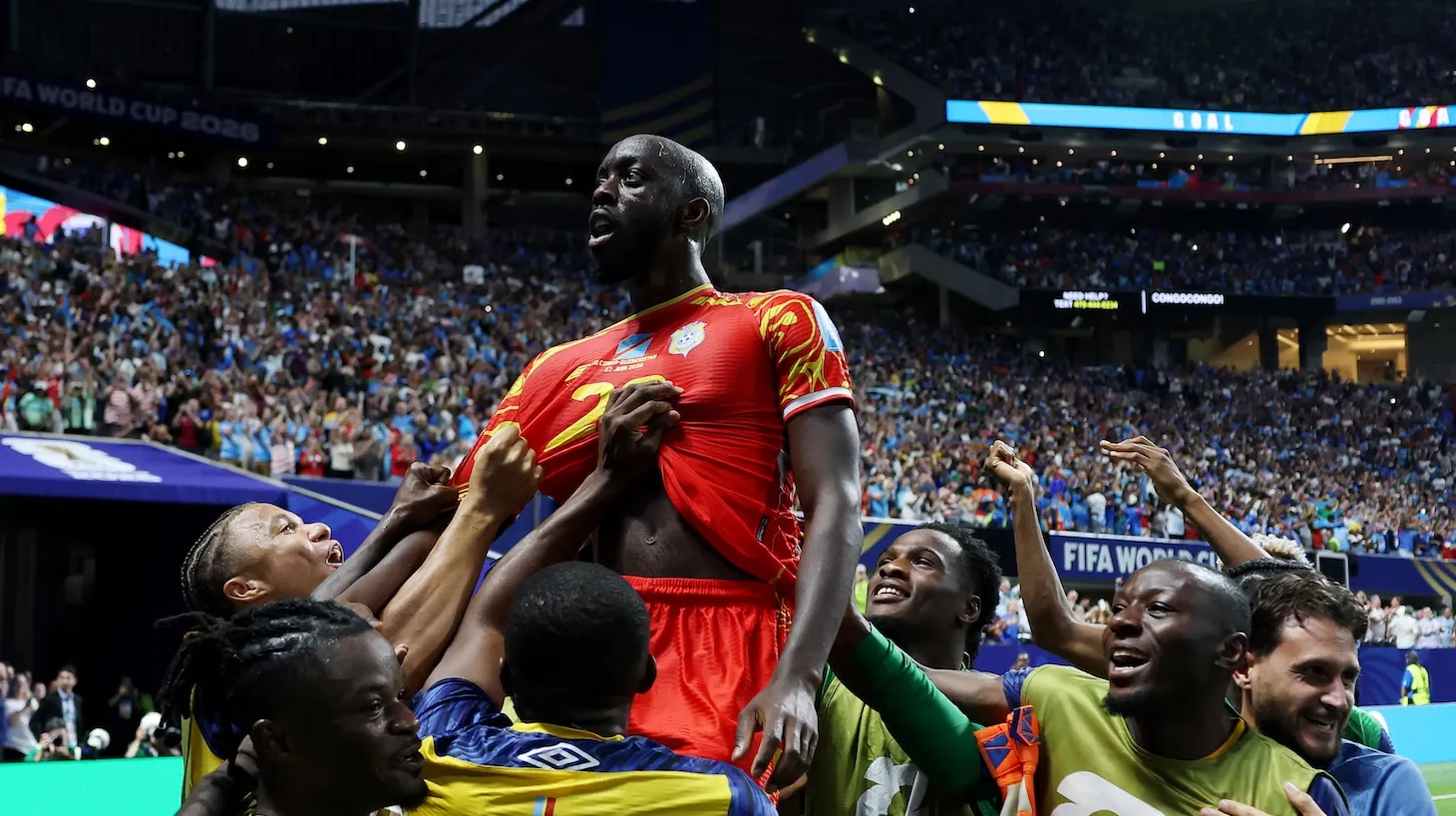
Wissa played a pivotal role in the comeback, earning a penalty that he converted to level the match. Later, a deft flick from Fiston Mayele redirected a shot from Meschak Elia past the Uzbek goalkeeper, giving DR Congo the lead. This turnaround secured their advancement to the next stage of the competition.
Support from fans and the wider continent
The atmosphere at the matches, particularly for DR Congo, has been vibrant. Fans, including those from other African nations, have shown strong support for the Congolese team.
At the Mercedes Benz Stadium in Atlanta, Georgia, a significant number of Congolese fans, dressed in their national blue jerseys, were present to cheer their team on. Their passion was evident, despite the high cost of tickets.
Nigerians present at the stadium also showed support for DR Congo, reflecting a broader continental solidarity. The success of DR Congo has been celebrated as a moment of pride for Africa.
The qualification of DR Congo for the round of 32 is a testament to their resilience and tactical adjustments throughout the group stage of the World Cup 2026.
Read Also
Source: defector.com
